


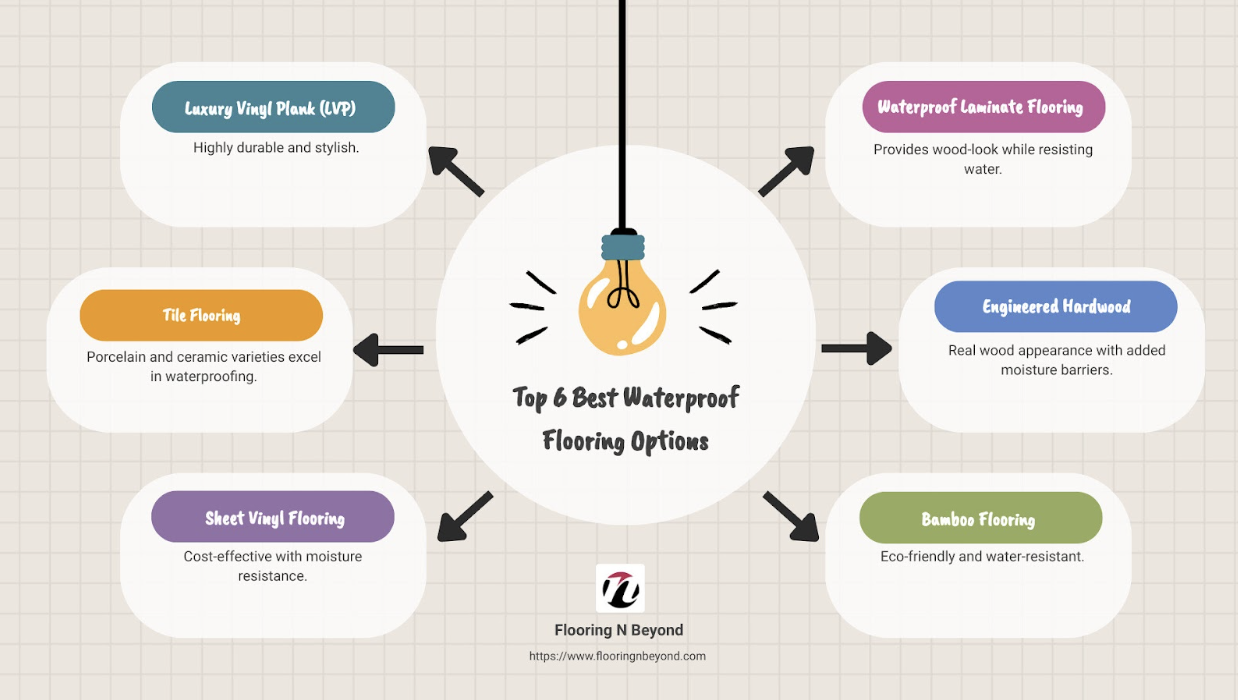
When it comes to the Best waterproof flooring options, finding the right choice for your home can feel overwhelming. With a wide range of materials available, the process can be daunting. However, a few standout options consistently emerge as leaders in durability and water resistance:
-
Luxury Vinyl Plank (LVP) - Highly durable and stylish.
-
Tile Flooring - Available in porcelain and ceramic varieties that excel in waterproofing.
-
Sheet Vinyl Flooring - Cost-effective with moisture resistance.
-
Waterproof Laminate Flooring - Provides the look of wood while resisting water.
-
Engineered Hardwood - Combines a real wood appearance with added moisture barriers.
-
Bamboo Flooring - Eco-friendly and water-resistant.
Waterproof flooring is essential for ensuring that your floors withstand moisture challenges in areas such as kitchens, bathrooms, and basements. This type of flooring not only prevents water damage but also improves the longevity and aesthetics of your home. By resisting moisture, waterproof floors offer protection against common issues like warping, staining, and mold growth, making them a smart investment for busy homeowners.
Choosing waterproof flooring is more than just a practical decision. It reflects a commitment to a home that is both functional and visually appealing. At Flooring N Beyond, we simplify this decision by offering a range of high-quality waterproof options designed to meet diverse lifestyle needs. We ensure that choosing the right flooring solution becomes a seamless part of your renovation journey.
What Makes Flooring Waterproof?
Understanding the distinction between waterproof and water-resistant flooring is key. Waterproof flooring is designed to be impervious to water, meaning it can handle prolonged exposure without damage. In contrast, water-resistant flooring can withstand water to a certain degree but requires immediate cleanup to prevent damage.
Moisture Barriers: The First Line of Defense
Moisture barriers are essential in waterproof flooring. These barriers prevent water from penetrating into the core of the flooring material. Whether it's a vinyl plank or engineered hardwood, a moisture barrier acts as a shield, protecting your floors from warping, swelling, and mold.
Inorganic Materials: Built to Resist
When it comes to waterproof flooring, inorganic materials are your best friend. Unlike organic materials like solid hardwood, which can swell and warp, inorganic materials such as ceramic tiles and certain vinyl products resist moisture naturally. These materials do not degrade when exposed to water, making them ideal for areas prone to spills and humidity.
Synthetic Polymers: The Secret Ingredient
Many waterproof flooring options incorporate synthetic polymers. These polymers, such as those found in luxury vinyl plank (LVP) flooring, create a durable and water-impervious surface. By using synthetic materials, manufacturers can improve both the durability and water resistance of flooring products, ensuring they stand up to daily wear and tear.
Understanding these elements can help you make an informed decision when selecting the right waterproof flooring for your home. As we explore the Best Waterproof Flooring Options in the next section, keep these factors in mind to ensure you choose a product that meets both your functional and aesthetic needs.
Top 6 Best Waterproof Flooring Options
When it comes to protecting your home from water damage, choosing the right flooring is crucial. Let's explore the best waterproof flooring options available today.
1. Luxury Vinyl Plank (LVP)
Durability and Style: LVP is a top choice for many homeowners due to its resilience and stylish appearance. It mimics the look of hardwood or stone but offers better water resistance.
Installation and Moisture Protection: This flooring type is easy to install, often using a click-and-lock system that forms a tight, waterproof seal. The vinyl top layer prevents water from seeping through, making it perfect for kitchens and bathrooms.
2. Tile Flooring
Porcelain and Ceramic: Tiles are inherently waterproof, making them ideal for areas with high moisture levels. Porcelain tiles, in particular, have a low absorption rate, offering superior protection against water.
Grout Sealing and Slip Resistance: While tiles are water-resistant, grout lines need sealing to prevent water penetration. Opt for unglazed tiles for better slip resistance in wet areas.
3. Sheet Vinyl Flooring
Cost-Effective and Seamless: Sheet vinyl is a budget-friendly option that provides a seamless surface, reducing the risk of water infiltration. Its retro patterns add a nostalgic charm to any room.
Moisture Resistance: With fewer seams, sheet vinyl minimizes water entry points, making it a practical choice for bathrooms and laundry rooms.
4. Waterproof Laminate Flooring
Core Construction and Budget-Friendly: Modern waterproof laminate features a water-resistant core, making it a great alternative to traditional laminate. It's also a cost-effective option for those on a budget.
Installation: It can often be installed as a DIY project, but professional installation ensures the best water resistance.
5. Engineered Hardwood
Real Wood Look with Moisture Barrier: Engineered hardwood offers the elegance of real wood with added water protection. Its layered construction includes a moisture barrier that guards against spills.
Durability and Installation: Although more durable than traditional wood, professional installation is recommended to maintain its water-resistant properties.
6. Bamboo Flooring
Water-Resistant and Eco-Friendly: Bamboo is a sustainable choice that provides natural water resistance. It's tougher than many hardwoods and can withstand moisture better.
Durability and Installation: Bamboo's strength makes it suitable for high-traffic areas, and it can be installed in various ways, including floating or gluing down.
These options offer a range of styles, budgets, and functionalities to suit any home. Next, we'll explore the best waterproof flooring choices for specific rooms in your house, ensuring you find the perfect match for every space.
1. Luxury Vinyl Plank (LVP)
Luxury Vinyl Plank (LVP) is a standout choice for homeowners looking to blend style with practicality. Here's why it's considered one of the best waterproof flooring options.
Durability and Aesthetic Appeal
LVP is celebrated for its durability. It's designed to handle heavy foot traffic and resist scratches, making it ideal for busy households with pets or children. The aesthetic appeal of LVP is another strong point. It closely mimics the look of natural wood or stone, offering a variety of finishes and textures to suit any decor style.
Installation and Moisture Protection
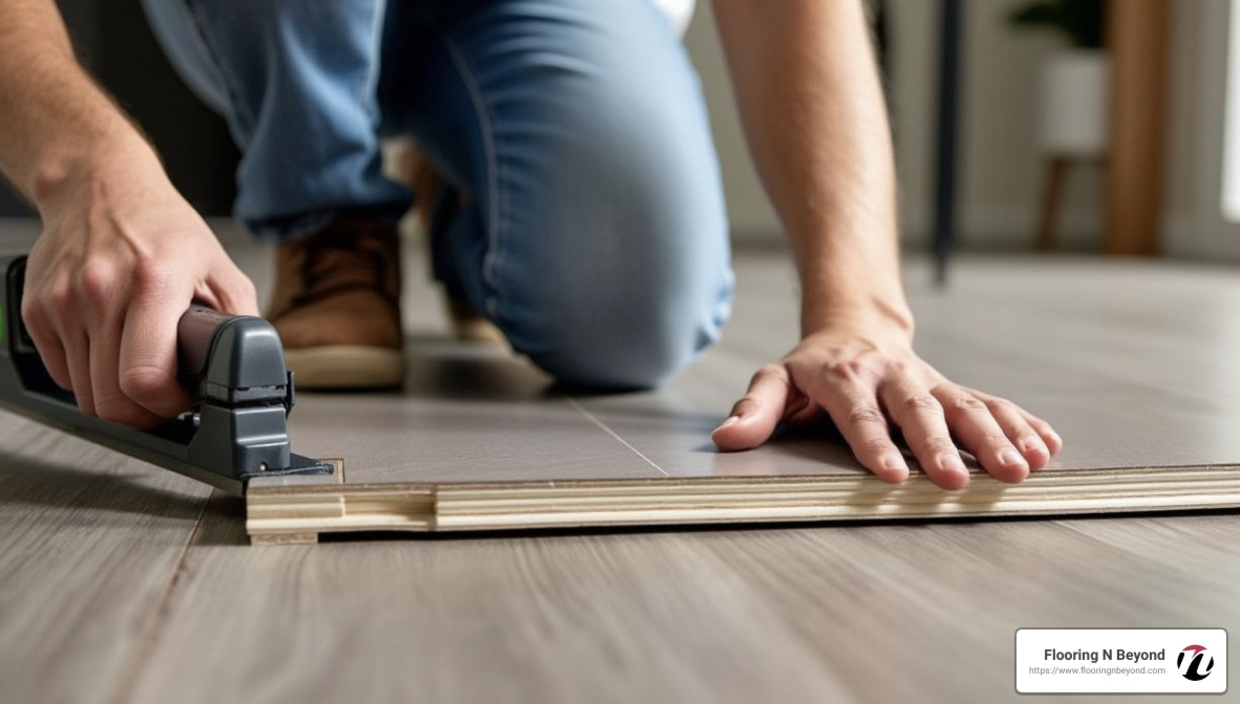
Installing LVP is straightforward, thanks to its click-and-lock system. This method not only simplifies installation but also creates a tight seal that improves the flooring's waterproof capabilities. The planks are engineered with a waterproof core and a protective top layer that prevents water from penetrating, safeguarding your floors from spills and humidity.
Real-Life Applications
Consider a busy family kitchen where spills are inevitable. LVP's moisture protection ensures that these common accidents don't lead to long-term damage, maintaining the floor's integrity and appearance over time. This makes LVP a smart choice for kitchens, bathrooms, and even basements where moisture is a constant concern.
In summary, Luxury Vinyl Plank combines durability, style, and practicality, making it a top contender for those seeking reliable waterproof flooring. Next, we'll dig into the benefits of tile flooring, another excellent option for moisture-prone areas.
2. Tile Flooring
Tile flooring is a classic and reliable option for areas prone to moisture, like bathrooms and kitchens. With its robust nature and versatile design options, tile remains a popular choice among homeowners seeking the best waterproof flooring options.
Porcelain and Ceramic
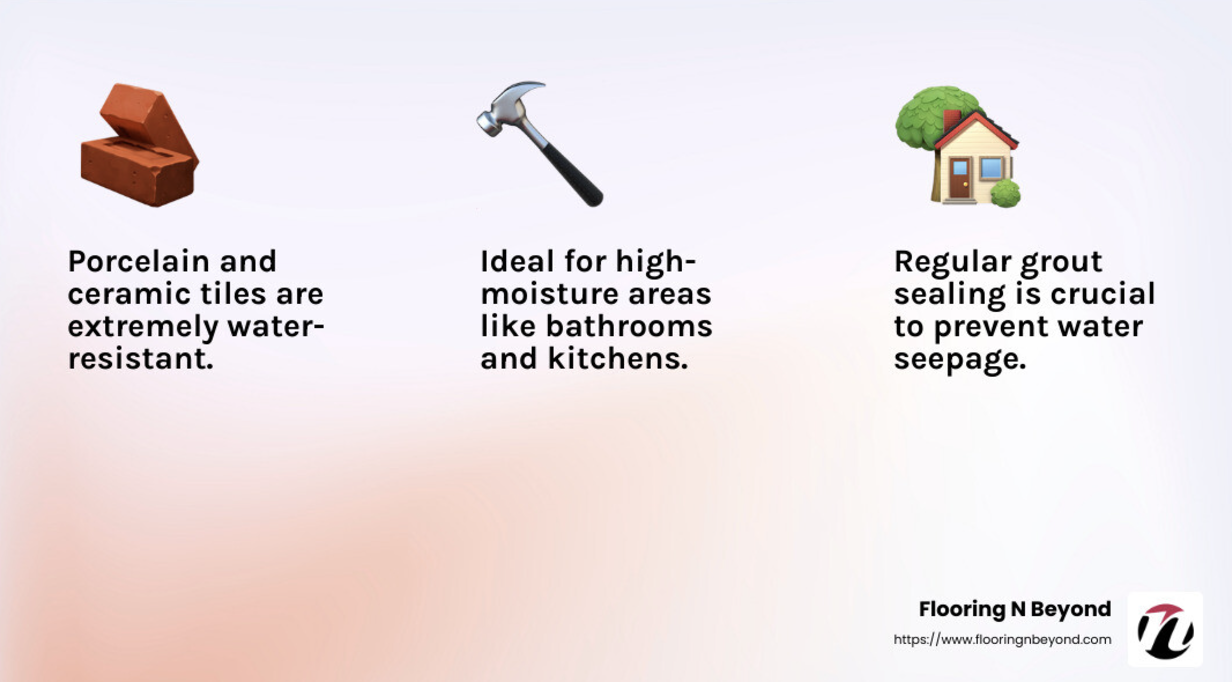
Porcelain and ceramic tiles are the heavyweights of waterproof flooring. Porcelain tile is particularly notable for its extremely low water absorption rate, which means it can handle being submerged without damage. This makes it a fantastic choice for bathrooms and other high-moisture areas.
Ceramic tiles, while slightly more absorbent than porcelain, still offer excellent water resistance. They are durable and can withstand the rigors of daily life, making them suitable for both residential and commercial spaces.
Grout Sealing
While the tiles themselves are waterproof, grout lines can be a weak spot. Grout is porous and can allow water to seep through if not properly sealed. Regularly sealing grout is essential to maintain the waterproof integrity of your tile flooring.
Slip Resistance
Safety is another key consideration with tile flooring. Unglazed tiles are recommended for areas where slip resistance is important, such as bathrooms and entryways. Their textured surface provides better traction, reducing the risk of slips and falls.
Real-Life Applications
Imagine a busy bathroom where water splashes are a daily occurrence. Porcelain or ceramic tiles, with their water-resistant properties, can handle this environment with ease. By opting for unglazed, slip-resistant tiles and ensuring grout is well-sealed, homeowners can enjoy a durable and safe flooring solution.
In conclusion, tile flooring offers a blend of durability, style, and safety, making it an excellent choice for moisture-prone areas. Next, we'll explore the advantages of sheet vinyl flooring, another versatile and cost-effective option for waterproofing your home.
3. Sheet Vinyl Flooring
Sheet vinyl flooring is a cost-effective option that combines practicality with a touch of nostalgia. It's an excellent choice for those looking to upgrade their floors without breaking the bank.
Cost-Effective and Stylish
One of the standout features of sheet vinyl is its affordability. Compared to other durable flooring solutions, sheet vinyl offers a budget-friendly alternative without sacrificing quality. This makes it a popular choice for homeowners who want to achieve a stylish look without a hefty price tag.
Retro patterns have made a comeback, and sheet vinyl is leading the charge. From bold geometric designs to classic floral motifs, the variety of patterns available allows you to add a unique flair to any room. These patterns not only improve the aesthetic appeal but also bring a fun, retro vibe to your space.
Seamless Installation
The seamless installation of sheet vinyl is another major advantage. Unlike flooring options with individual planks or tiles, sheet vinyl comes in large, continuous rolls. This means fewer seams and a smoother finish, reducing the risk of water seeping through gaps. It's an ideal choice for bathrooms and kitchens where moisture is a concern.
Superior Moisture Resistance
Sheet vinyl's moisture resistance is one of its most attractive features. The material is inherently waterproof, making it suitable for areas prone to spills and splashes. Whether it's a busy kitchen or a bathroom with frequent water exposure, sheet vinyl can handle it all.
Real-Life Applications
Consider a busy family kitchen where spills and messes are part of daily life. Sheet vinyl's waterproof nature makes it a practical choice, ensuring easy clean-up and long-lasting durability. Plus, with its seamless design, there's no need to worry about water seeping through cracks.
In summary, sheet vinyl flooring offers a perfect blend of style, affordability, and moisture resistance. It's an excellent option for those seeking the best waterproof flooring options on a budget. Next, we'll dive into waterproof laminate flooring, which combines the look of wood with improved moisture protection.
4. Waterproof Laminate Flooring
Waterproof laminate flooring is an ideal choice for those seeking the beauty of wood without the high cost or maintenance. It offers a blend of core construction, moisture protection, and budget-friendly benefits.
Advanced Core Construction
The secret behind waterproof laminate flooring lies in its advanced core construction. Modern laminate floors are equipped with dense cores designed to resist water infiltration. This core acts as a formidable barrier, preventing moisture from reaching the fiberboard layer. Brands like Newton have harnessed this technology to offer collections that ensure your floors remain beautiful and damage-free, even in damp conditions.
Improved Moisture Protection
While traditional laminate isn't known for its water resistance, innovations have led to the development of waterproof varieties. These floors feature a watertight locking mechanism that keeps water from seeping through the seams. This makes them a reliable choice for handling everyday spills or pet accidents. However, remember that, like any flooring, they aren't immune to extensive water exposure like flooding.
Budget-Friendly Option
Waterproof laminate is a cost-effective alternative to hardwood. It offers the same aesthetic appeal but at a fraction of the price. This makes it a popular choice for budget-conscious homeowners who don't want to compromise on style. The affordability doesn't come at the expense of quality, ensuring you get a durable product that can withstand daily wear and tear.
Easy Installation
Installation of waterproof laminate flooring is straightforward, thanks to its click-lock system. This feature allows the planks to snap together easily, making it a great option for DIY enthusiasts. The system also contributes to its water-resistant properties by ensuring tight seams. This ease of installation not only saves time but also reduces labor costs, further enhancing its appeal as a budget-friendly option.
In conclusion, waterproof laminate flooring offers a practical and stylish solution for those seeking the best waterproof flooring options. It combines the allure of wood with the durability and moisture protection needed for modern living. Next, we'll explore engineered hardwood, which marries the elegance of real wood with improved water resistance.
5. Engineered Hardwood
Engineered hardwood is a fantastic choice for those who crave the natural beauty of real wood but need a more practical solution for moisture-prone areas. This flooring type combines the real wood look with moisture barriers, durability, and straightforward installation.
Real Wood Look
One of the most appealing aspects of engineered hardwood is its authentic wood appearance. Unlike laminate, which mimics wood, engineered hardwood has a top layer of real wood. This layer showcases the natural grain patterns and textures that many homeowners love. It offers the timeless elegance of traditional hardwood, making it a popular choice for living rooms, dining areas, and even some kitchens.
Moisture Barrier
Engineered hardwood is crafted with a cross-layered construction that provides a built-in moisture barrier. This design includes multiple layers of plywood or high-density fiberboard beneath the top wood layer. These layers are bonded together in a way that resists moisture and prevents warping. This moisture barrier makes engineered hardwood more suitable for areas with higher humidity levels, like basements or bathrooms, compared to traditional hardwood.
Durability
Durability is another strong suit of engineered hardwood. Its layered construction not only aids in moisture resistance but also improves its strength and stability. This makes it less likely to expand or contract with changes in humidity, reducing the risk of gaps or buckling. With proper care, engineered hardwood can last for many years, offering both beauty and resilience.
Installation
Installing engineered hardwood is generally easier than solid hardwood. It can be installed using various methods, including glue-down, nail-down, or floating, depending on the subfloor and room conditions. The floating installation method, where planks are clicked together over a subfloor, is particularly popular for its simplicity and speed. This versatility in installation allows homeowners to choose the method that best suits their needs and skill level.
In summary, engineered hardwood provides a compelling mix of real wood aesthetics, moisture resistance, and durability. It's a versatile choice that can improve the beauty and functionality of any home. Next, we'll dive into bamboo flooring, a sustainable option that combines durability with eco-friendliness.
6. Bamboo Flooring
Bamboo flooring is an excellent choice for those seeking a sustainable and eco-friendly flooring option. It combines water-resistant properties with durability, making it suitable for various parts of the home. Let's explore why bamboo flooring might be the perfect fit for your needs.
Water-Resistant
While bamboo isn't entirely waterproof, it offers impressive water resistance. This characteristic makes it a viable option for areas where spills and moisture are common, like kitchens and entryways. It's important, however, to clean up spills quickly to prevent any potential damage.
Durability
Bamboo is renowned for its strength and durability. In fact, some types of bamboo flooring are harder than traditional hardwoods, like oak. This makes bamboo an excellent choice for high-traffic areas. With proper care, bamboo flooring can withstand daily wear and tear, maintaining its beauty and functionality for years.
Eco-Friendly
One of the standout features of bamboo flooring is its environmental friendliness. Bamboo is a fast-growing grass that can be harvested without killing the plant, making it a renewable resource. This makes bamboo a popular choice for environmentally conscious homeowners who want to reduce their carbon footprint.
Installation
Bamboo flooring is relatively straightforward to install. It can be laid using several methods, including nail-down, glue-down, or floating. The floating installation method, where planks are clicked together over a subfloor, is popular due to its simplicity and ease. This versatility allows for a quick and efficient installation process, even for DIY enthusiasts.
In conclusion, bamboo flooring offers a durable, eco-friendly, and water-resistant solution for your home. Its easy installation makes it accessible for many homeowners, providing a sustainable flooring option that doesn't compromise on style or function. Next, we'll discuss the best waterproof flooring options for specific rooms, ensuring you find the perfect match for each space in your home.
Best Waterproof Flooring Options for Specific Rooms
Choosing the right flooring for each room in your home is crucial, especially when moisture is a concern. Let's explore the best waterproof flooring options for kitchens, bathrooms, basements, and laundry rooms.
Kitchens
Kitchens are busy spaces that demand durable and easy-to-clean flooring. Vinyl and tile are popular choices here.
-
Luxury Vinyl Plank (LVP): Known for its durability and water resistance, LVP is perfect for kitchens where spills are common. It's easy to clean and comes in styles that mimic wood or stone, adding aesthetic appeal.
-
Tile Flooring: Ceramic and porcelain tiles are classic kitchen choices. They're highly durable and offer excellent moisture protection. Just remember to seal the grout to maintain water resistance and prevent stains.
Bathrooms
Bathrooms require flooring that can handle high moisture levels while maintaining style. Here are the top options:
-
Ceramic Tiles: These are a go-to for bathrooms due to their waterproof nature and slip resistance. Plus, they come in a variety of styles to match any decor.
-
Vinyl Flooring: With its water-resistant properties and easy maintenance, vinyl is a great bathroom choice. It offers the look of natural materials without the hassle.
-
Stone Flooring: Natural stone, like marble or slate, adds luxury to bathrooms. While beautiful, it does require regular sealing to protect against moisture.
Basements
Basements often face moisture issues, so choosing the right flooring is vital for comfort and protection:
-
Vinyl Flooring: Waterproof vinyl is ideal for basements. It's resilient against humidity and easy to install over concrete slabs.
-
Rubber Flooring: Known for its moisture protection and comfort underfoot, rubber flooring is a practical choice for basements. It's also slip-resistant, making it safe for families.
Laundry Rooms
Laundry rooms need flooring that can withstand spills and heavy appliances. Consider these options:
-
Vinyl: Durable and moisture-resistant, vinyl is perfect for laundry rooms. It's also easy to clean, handling detergent spills with ease.
-
Tile: Ceramic or porcelain tiles offer durability and water protection. They can handle the weight of washing machines and dryers without damage.
-
Laminate Flooring: While not as water-resistant as vinyl, certain types of laminate offer moisture protection. It's a budget-friendly option that can mimic the look of more expensive materials.
By selecting the appropriate waterproof flooring for each room, you ensure both functionality and style. Next, we'll dive into maintenance tips to keep your waterproof floors looking their best and lasting long.
Maintenance Tips for Waterproof Flooring
Proper maintenance is key to keeping your waterproof flooring in top condition. Here are some tips to ensure your floors remain beautiful and functional for years to come.
Regular Cleaning
Routine cleaning is essential for maintaining the appearance and longevity of your floors. Use a soft broom or vacuum to remove dirt and debris regularly. For deeper cleaning, a damp mop with a mild detergent can help remove stains and spills without damaging the floor's protective layer.
Suitable Products
Choosing the right cleaning products is crucial. Avoid harsh chemicals that can strip away the floor's protective coating. Instead, opt for cleaners specifically designed for waterproof flooring. These products are formulated to clean effectively without compromising the floor’s water-resistant properties.
Grout Sealing
For tile flooring, grout sealing is a must. Grout is porous and can absorb moisture, leading to mold and mildew. Regularly inspect and reseal grout lines to keep them watertight. This not only prevents water damage but also keeps the grout looking clean and fresh.
Seasonal Changes
Flooring materials can expand and contract with changes in temperature and humidity. During the summer, higher humidity can cause floors to swell, while winter's dry air can lead to contraction. To mitigate these effects, consider using a humidifier or dehumidifier to maintain stable indoor humidity levels.
Humidity Control
Consistent humidity control is vital for preventing damage. Aim to keep indoor humidity between 30% and 50%. This range helps prevent warping and buckling, ensuring your waterproof flooring remains stable and intact.
By following these maintenance tips, you can extend the life and beauty of your waterproof floors. Let's move on to some frequently asked questions about the best waterproof flooring options to help you make informed decisions.
Frequently Asked Questions about Best Waterproof Flooring Options
Which type of flooring is best for waterproofing?
When it comes to waterproofing, ceramic tiles and vinyl flooring are top contenders. Ceramic tiles are known for their durability and water resistance, making them ideal for areas like bathrooms and kitchens. Their surfaces are impervious to water, and with proper grout sealing, they offer excellent protection against moisture.
Vinyl flooring, particularly Luxury Vinyl Plank (LVP), is another excellent choice. It's highly water-resistant and can mimic the look of natural wood or stone. Vinyl is easy to maintain and install, making it a popular choice for both residential and commercial spaces.
What flooring is 100% waterproof?
For those seeking 100% waterproof flooring, Aquatec Flooring® is a standout option. This flooring incorporates advanced technologies like EVA Rubber Padding and a UV Wear Layer to ensure complete water resistance. It's perfect for high-moisture areas, providing peace of mind against spills and accidents.
Additionally, sheet vinyl flooring offers seamless installation, which helps prevent water from seeping through any gaps. Its continuous surface makes it an excellent choice for rooms prone to flooding or heavy moisture exposure.
Which is better: waterproof laminate or vinyl plank?
Choosing between waterproof laminate and vinyl plank often depends on your specific needs and preferences. Vinyl plank is generally more water-resistant than laminate, making it a safer bet for areas with high moisture levels. It's also easier to clean and maintain, which is a significant advantage in busy households.
Waterproof laminate has improved significantly with advancements in technology. It offers a more authentic wood appearance and can be a budget-friendly option. However, its core can still be vulnerable to water if not installed correctly.
In terms of maintenance, both options are relatively low-maintenance. However, vinyl plank often edges out laminate due to its superior water resistance and ease of cleaning.
By understanding the strengths of each flooring type, you can choose the best waterproof option for your home. Now, let's dig into the best choices for specific rooms to tailor your selection even further.
Conclusion
Choosing the right flooring for your home can be a daunting task, but understanding the options makes it easier. Waterproof flooring is essential for areas prone to moisture like kitchens, bathrooms, and basements. It not only protects your home but also improves its beauty and value.
At Flooring N Beyond, we offer a wide range of quality waterproof flooring options, including Luxury Vinyl Plank (LVP), ceramic tiles, and waterproof laminate. Each of these options has unique benefits, from the durability and aesthetic appeal of vinyl to the timeless elegance of tile. Our expert team can guide you in selecting the best flooring to suit your needs and style.
Professional installation is crucial to ensure your flooring performs at its best. Incorrect installation can lead to problems like moisture seepage, which can damage your floors and void warranties. Our professional services ensure that your flooring is installed correctly and efficiently, giving you peace of mind.
We pride ourselves on offering competitive prices without compromising on quality. Whether you're renovating a single room or your entire home, our solutions are custom to fit your budget. Visit our flooring shop to explore our collections and get started on changing your space.
In conclusion, investing in quality waterproof flooring is a smart choice for any homeowner. With the right materials and professional installation, you can enjoy a beautiful, durable, and moisture-resistant floor for years to come. Trust Flooring N Beyond to help you find the perfect flooring solution for your home.


