

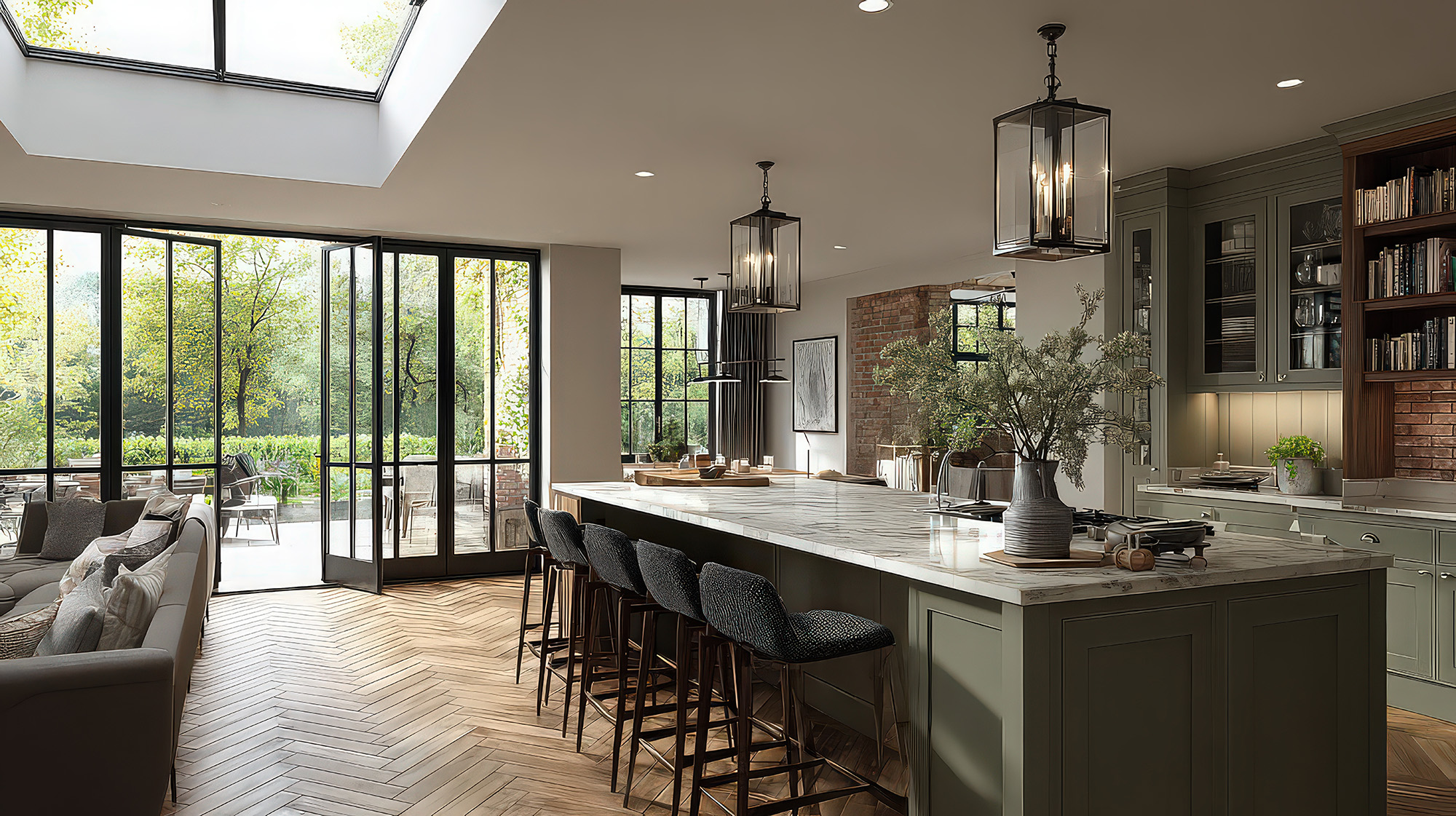
For decades, conventional design wisdom cautioned homeowners against placing real wood flooring in spaces prone to water, steam, and food splatters. Kitchens were strictly reserved for tile or linoleum. However, modern open-concept floor plans have fundamentally changed how we design our homes, creating a desire for seamless flooring that flows naturally from living areas straight into the heart of the home.
Thanks to advanced plank engineering, superior topcoats, and proactive installation techniques, the answer to this age-old question is a resounding yes. Hardwood can thrive in kitchen environments when chosen and cared for correctly.
Why Homeowners Love Hardwood in the Kitchen
Installing hardwood flooring in the kitchen offers distinct aesthetic and ergonomic benefits that traditional tile simply cannot replicate.
Seamless Visual Flow: Extending the same floor surface through your living room, dining room, and kitchen visually enlarges your home, eliminating awkward room transitions.
Underfoot Comfort: Hardwood is naturally more forgiving and softer underfoot than ceramic or porcelain tile, significantly reducing foot fatigue during long prep sessions at the counter.
Natural Warmth: Wood brings rich organic tones and texture into a space dominated by cool stainless steel appliances and hard stone countertops.
Solid vs. Engineered Wood: The Humidity Factor
When selecting hardwood for a kitchen, structural construction is a vital consideration.
Engineered Hardwood Advantage: Engineered wood planks feature a top veneer of real hardwood bonded to cross-layered core plies of high-density wood. This cross-grain construction prevents the plank from expanding, contracting, or cupping when exposed to shifting humidity and ambient moisture.
Solid Hardwood Considerations: While solid hardwood can be installed in kitchens, it requires precise indoor climate and humidity control to manage natural swelling and shrinkage across changing seasons.
Sealing and Finish: Your Floor’s First Line of Defense
A floor’s resistance to kitchen mess comes down to the quality of its protective surface finish.
Polyurethane Topcoats: High-performance commercial-grade polyurethane sealants form a protective barrier over the wood grain, giving you ample time to wipe up accidental liquid spills before moisture penetrates the surface layer.
Precision Site-Finishing: In some kitchen installations, finishing solid wood floors on-site coats the tiny seams between planks, providing extra defense against liquid penetration along plank edges.
Practical Tips for Daily Kitchen Hardwood Care
Living with hardwood in the kitchen requires simple, smart habits rather than complicated routines.
Use Accent Rugs: Place stylish, non-rubber backed runner rugs in front of heavy-use zones like the sink, dishwasher, and refrigerator to catch stray drops or fallen food.
Manage Appliances: Inspect ice-maker lines and sink plumbing regularly to detect minor leaks before they can damage subfloors.
Prompt Cleanups: Wipe up dropped liquids, ice cubes, or cooking oil splatters as soon as they occur.
With modern engineered options and high-durability finishes, you don't have to compromise on style in the kitchen. Bringing real wood into your cooking space creates a cohesive, warm, and inviting atmosphere that stands up beautifully to modern family life.


