

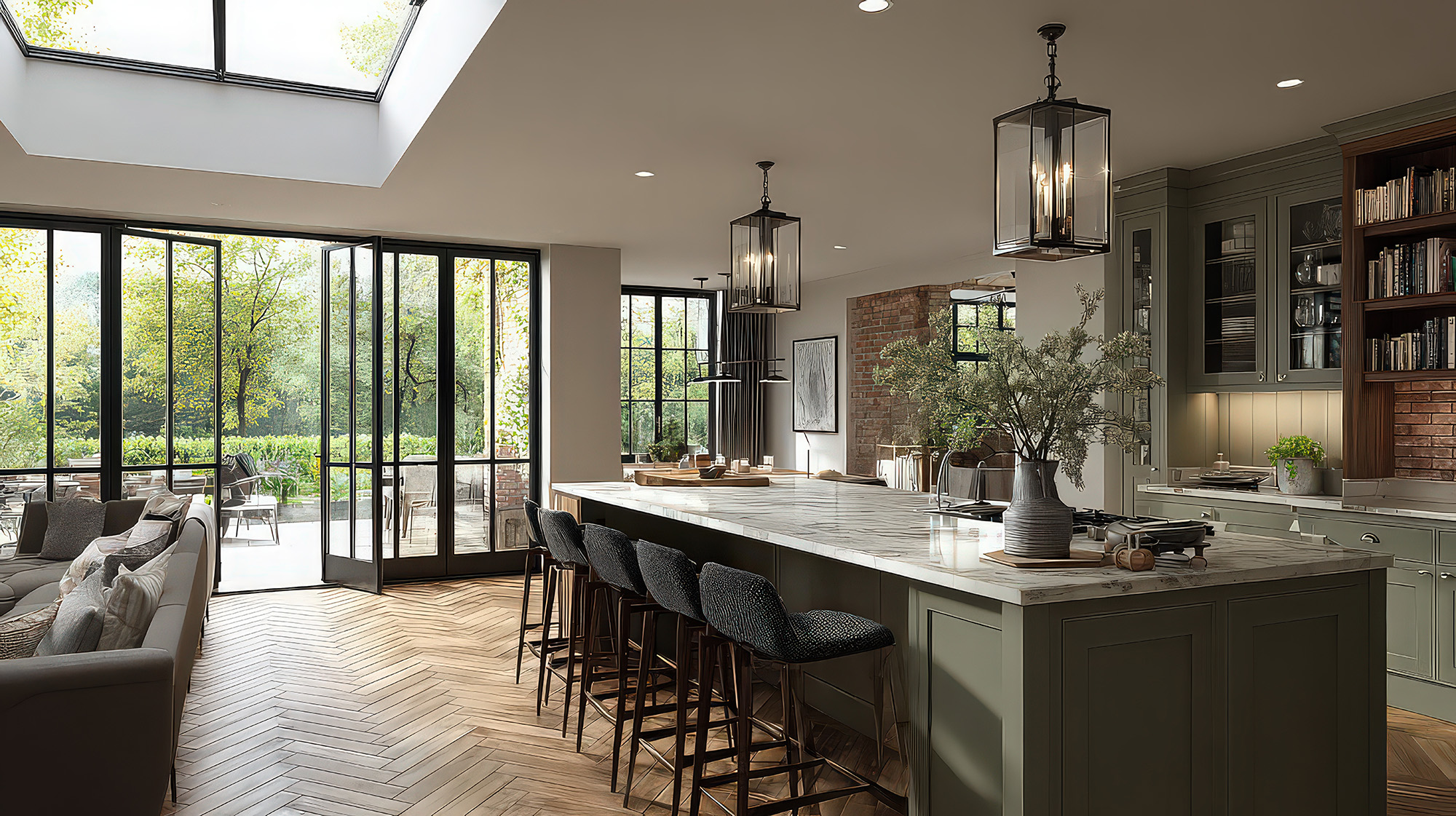
Hardwood flooring remains one of the most sought-after features in residential interior design. Its natural warmth, rich graining, and timeless elegance elevate almost any room style. However, when exploring real wood options, homeowners are quickly presented with a fundamental choice: solid hardwood or engineered hardwood. Both options feature genuine wood, but their internal construction determines where and how they perform best.
Understanding Solid Hardwood
Solid hardwood is precisely what the name implies: each plank is cut from a single, continuous piece of solid lumber, typically 3/4-inch thick. Because it is solid wood from top to bottom, it offers unmatched long-term durability.
Refinishing Power: Solid hardwood can be sanded down and refinished multiple times over its lifecycle. If your style preferences change decades down the road, or if the surface suffers wear, refinishing restores the floor to brand-new condition.
Environmental Sensitivity: Because solid wood expands and contracts in response to changes in humidity and temperature, it is best suited for above-grade ground floors and upper levels where humidity levels remain controlled. It is generally not recommended for installation directly over concrete slabs or in basements.
Understanding Engineered Hardwood
Engineered hardwood is constructed using a real hardwood surface veneer bonded on top of multiple cross-ply layers of high-grade wood core. These underlying core layers are laid in opposing directions, creating an extraordinarily stable structural foundation.
Dimensional Stability: The cross-ply structure counteracts the natural tendency of wood to expand, cup, or warp when exposed to moisture fluctuations. This makes engineered hardwood ideal for installation across every level of the home, including basements and over concrete subfloors.
Design Versatility: Engineered construction allows manufacturers to produce wider and longer planks than are typically practical in solid wood, catering directly to popular modern design trends.
Making the Right Choice for Your Home
Choosing between solid and engineered hardwood comes down to three practical factors:
Subfloor Type: If installing over a concrete slab, engineered hardwood is generally the preferred choice.
Climate & Moisture: In areas with extreme seasonal humidity shifts or in lower-level rooms, engineered wood provides superior resistance against gapping and cupping.
Long-Term Goals: If you plan to remain in your home for generations and want the option to refinish your floors multiple times, solid hardwood offers unmatched longevity.


