

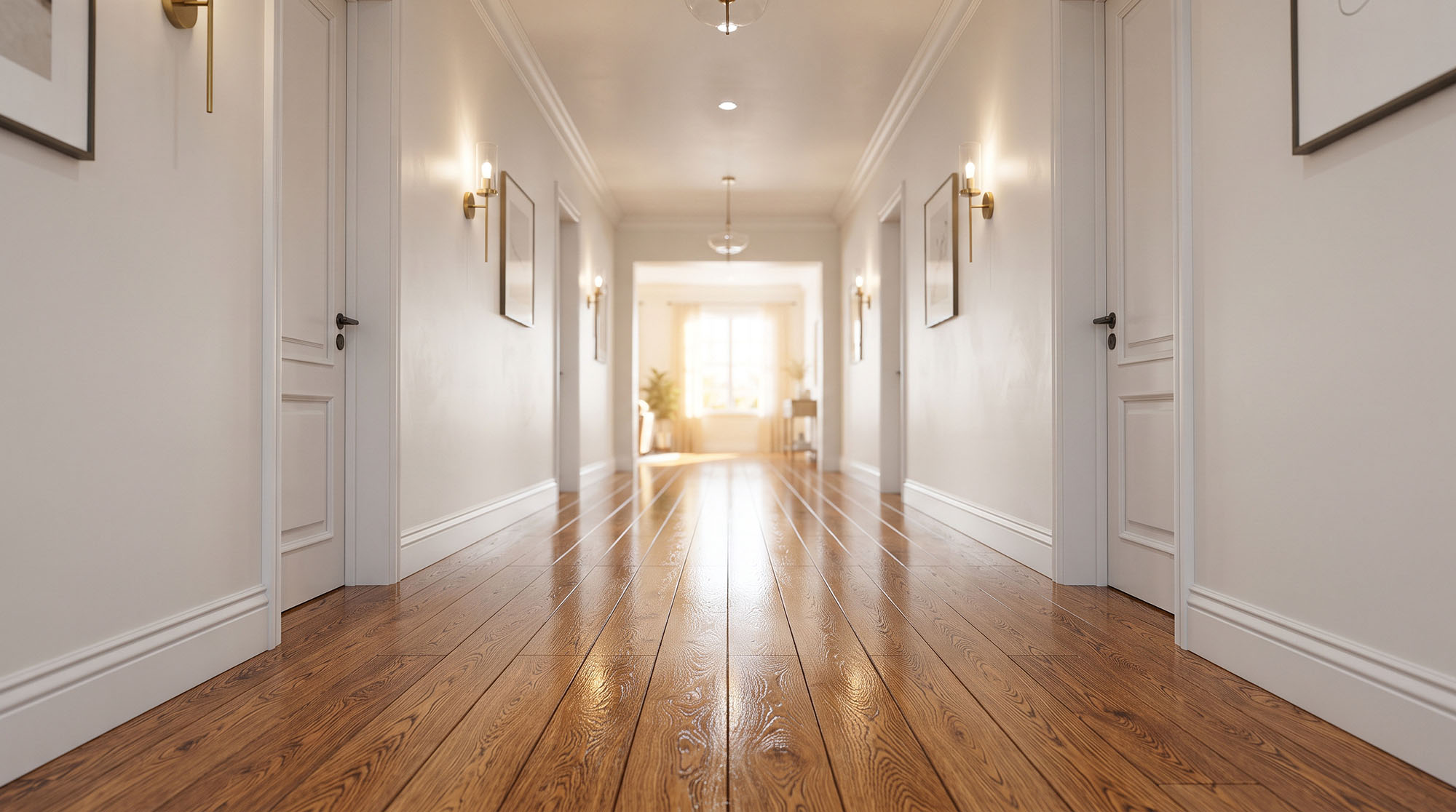
Nothing rivals the timeless beauty, warmth, and value added by real hardwood flooring. Hardwood elevates your home's aesthetic while providing a lasting surface that can endure for generations.
When shopping for hardwood flooring at Flooring N Beyond, the primary decision you'll face is choosing between Solid Hardwood and Engineered Hardwood. While both feature genuine natural wood on the surface, their core structures differ significantly.
Understanding Solid Hardwood
Solid hardwood is crafted from a single, continuous piece of solid lumber from top to bottom (typically 3/4” thick).
The Advantage: Longevity. Solid wood can be sanded down and refinished multiple times over its long lifespan. If your style changes in 10 or 15 years, you can alter the stain color without replacing the floor.
The Constraint: Moisture sensitivity. Because solid wood expands and contracts naturally with changes in humidity, it should only be installed at or above ground level (main floors and upper stories) over wooden subfloors. It is not recommended for basements or concrete slabs.
Understanding Engineered Hardwood
Engineered hardwood is made of a genuine hardwood top layer (called the veneer or wear layer) bonded over multiple cross-directional layers of real plywood or high-density core materials.
The Advantage: Dimensional stability. The cross-ply structure resists expanding, shrinking, or cupping when exposed to temperature changes and humidity fluctuations. This makes engineered wood safe for installation in basements, over concrete slabs, and in homes with radiant heating systems.
The Constraint: Refinishing limits. Depending on the thickness of the top hardwood veneer (ranging from 1.2mm to 6mm), engineered floors can typically only be refinished 1 to 3 times over their lifetime.
Solid vs. Engineered: Direct Comparison
Feature | Solid Hardwood | Engineered Hardwood |
Composition | 100% Solid Natural Wood Plank | Real Wood Veneer over Plywood Core |
Installation Levels | On or Above Grade (1st & 2nd Floors) | Any Level (Including Basements) |
Humidity Resistance | Low to Moderate | High Structural Stability |
Refinishing Potential | 4 to 7+ times | 1 to 3 times (depends on wear layer) |
Installation Method | Nail or Staple down | Float, Glue, Nail, or Staple |
Popular Hardwood Species & Trends
When choosing your wood floors, consider species hardness and grain characteristics:
Oak (Red & White): The industry standard for durability, accepting stains beautifully with a prominent grain pattern.
Maple: Fine, subtle grain with a light color profile—ideal for modern, Scandinavian, or minimalist interiors.
Hickory: Highly durable with dynamic color variation, perfect for modern rustic or farmhouse decor.
Expert Hardwood Services in Miamisburg, OH
From selecting wood species and plank widths to professional, mess-free installation, the expert crew at Flooring N Beyond helps you choose the perfect natural wood floor for your home's layout and climate requirements.
Schedule your in-home consultation today! Let the specialists at Flooring N Beyond measure your space and help you pick the perfect hardwood finish.


