

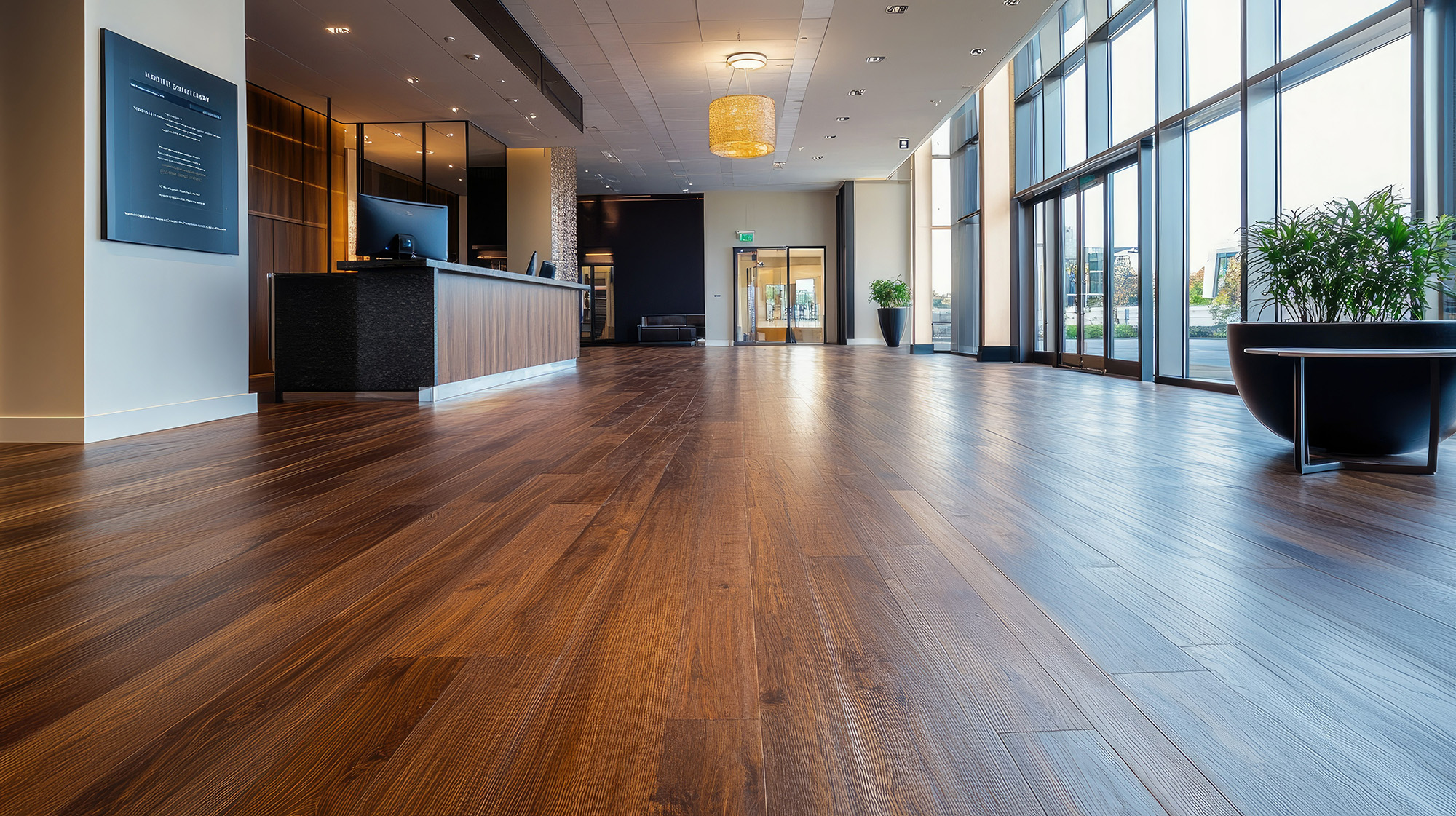
Hardwood flooring remains the gold standard for home design, offering a timeless appeal, unmatched character, and excellent long-term resale value. When you begin shopping for wood floors, you will quickly find that the market is divided into two primary categories: solid hardwood and engineered hardwood. Understanding the structural differences between them is essential to choosing a floor that will perform beautifully in your home environment.
What Exactly Is Solid Hardwood?
Solid hardwood is exactly what it sounds like—each plank is a single, solid piece of wood cut directly from a tree log, typically finished with a tongue-and-groove locking system. Because it is pure wood through and through, solid hardwood possesses incredible longevity. It can be sanded down and completely refinished multiple times over its lifespan. If you want to change the stain color twenty years down the road to match shifting design trends, solid wood allows you to do so.
However, because solid wood is completely natural, it is highly reactive to changes in relative humidity and temperature. In dry winter months, the planks will shrink slightly, creating small gaps. In humid summer months, they expand. For this reason, solid hardwood must be nailed or stapled down and should only be installed on or above ground level, over a proper wood subfloor. It is not suitable for basements or damp environments.
The Innovation of Engineered Hardwood
Engineered hardwood is genuine wood, but it is built differently to maximize structural stability. It consists of a top layer of real hardwood (called the wear layer) bonded over multiple cross-ply layers of high-density fiberboard or premium plywood. The grain of each layer runs in alternating directions.
This cross-grain construction counteracts the natural tendency of wood to expand and contract when exposed to moisture and temperature fluctuations. Because it is highly stable, engineered hardwood can be installed in areas where solid wood fails—including basements, over concrete slabs, and in homes with radiant floor heating systems. It can be glued down, stapled, or installed as a "floating" floor.
Long-Term Value and Refinishing
While engineered hardwood offers superior placement flexibility, its lifespan is determined by the thickness of its top wear layer. High-quality engineered planks with a thick wear layer can be sanded and refinished once or twice over their lifetime. However, budget-friendly options with thin wear layers cannot be refinished at all.
Solid hardwood will almost always win on sheer longevity, often lasting well over a century if properly maintained. Engineered hardwood, meanwhile, wins on versatility, allowing you to enjoy the luxury of real wood in spaces where solid planks simply aren't practical.
Investing in real wood flooring is an excellent way to elevate the beauty and value of your home for decades to come.
Whether the structural stability of engineered wood or the generational durability of solid hardwood is right for your project, our design team is here to guide you.


